With Moody’s recent decision to downgrade the U.S. credit rating from Aaa to Aa1, all three major rating agencies have now removed America from their highest tier. This follows Fitch’s action in 2023 and Standard & Poor’s initial downgrade in 2011. The timing is particularly notable as Washington considers budget legislation that could potentially expand annual deficits, highlighting tensions between tax reduction priorities and fiscal sustainability. Many investors are now questioning how these developments might affect their investment strategies and financial futures.
Market volatility has historically accompanied fiscal negotiations
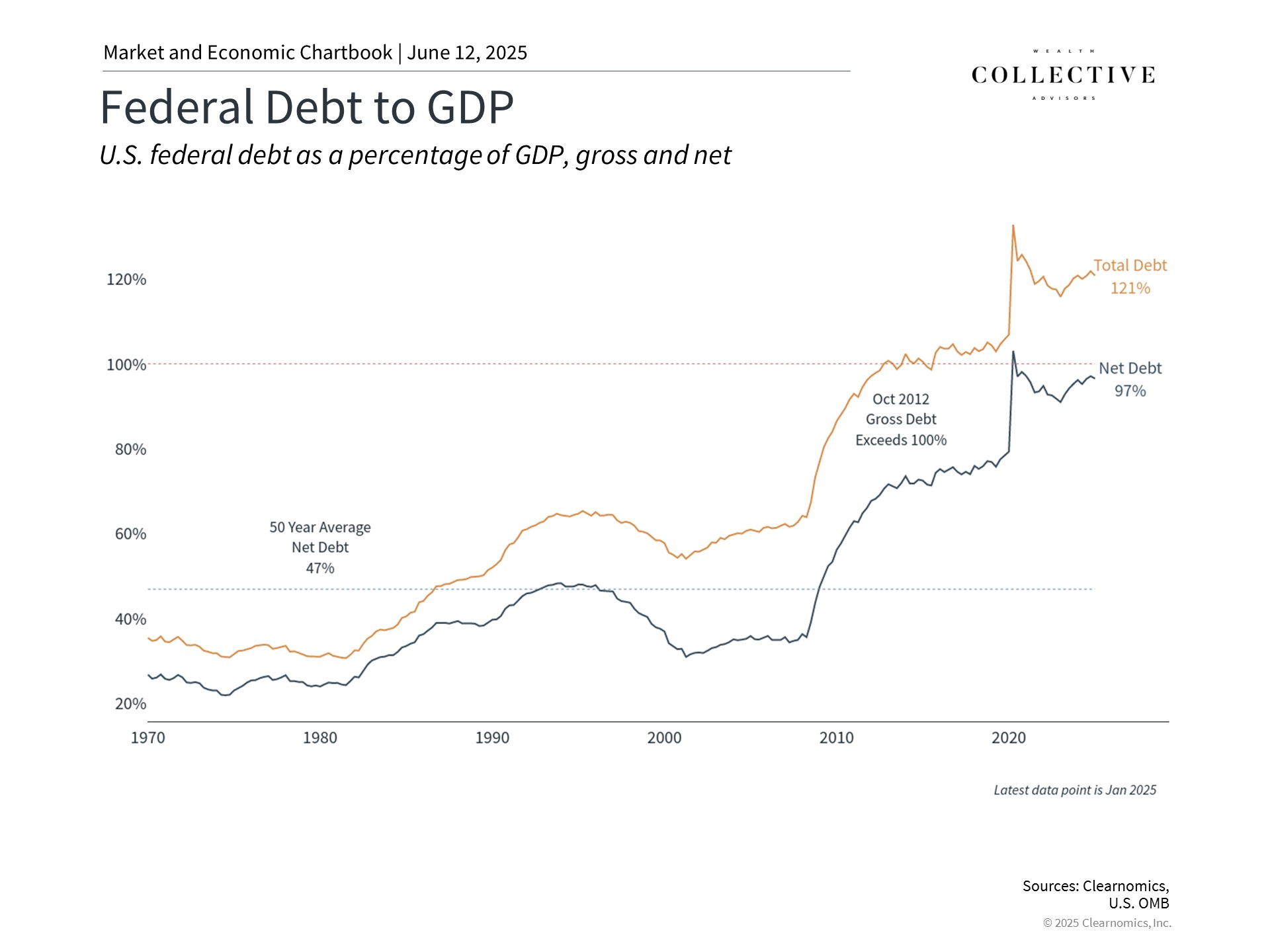
Over the past fifteen years, markets have weathered numerous periods of volatility triggered by budget deliberations and debt ceiling confrontations. Notable examples include Standard & Poor’s 2011 U.S. debt downgrade, the 2013 fiscal cliff scenario, and government shutdowns in 2018 and 2019. Despite initial market reactions, resolutions were ultimately reached in each instance, allowing markets to regain stability and continue their upward trajectory.
Interestingly, following the unprecedented 2011 downgrade that prompted a market correction, the S&P 500 fully recovered within a matter of months. Perhaps counterintuitively, despite these successive downgrades, U.S. Treasury securities continue to maintain their status as safe-haven assets during turbulent market periods and remain fundamental to global financial markets.
When considering national debt and Congressional budget conflicts, maintaining perspective is crucial. As stakeholders in America’s financial system, concern about unsustainable fiscal trajectories is natural and warranted. The challenges are complex, with various commissions and policy initiatives having fallen short of meaningfully reducing annual budget shortfalls.
While these issues deserve attention, they shouldn’t prompt reactive portfolio adjustments. Historical evidence shows that markets typically recover from fiscal uncertainties and downgrades over time. Adhering to a disciplined investment approach centered on long-term objectives, diversification, and fundamental principles—rather than reacting to Washington headlines or expecting Congress to resolve deficit issues—remains the most effective strategy for achieving financial goals.
Moody’s downgrade arrives at a pivotal moment as investor focus shifts from tariff concerns to Washington’s budget proposals. Although markets performed strongly following the recent presidential election, partly due to expectations for growth-oriented policies and extension of the Tax Cuts and Jobs Act of 2017 (TCJA), the Moody’s announcement serves as a reminder of underlying fiscal realities.
Moody’s specifically noted that “successive US administrations and Congress have failed to agree on measures to reverse the trend of large annual fiscal deficits and growing interest costs,” and expressed skepticism that “material multi-year reductions in mandatory spending and deficits will result from current fiscal proposals under consideration.”
Efforts underway to extend or permanentize Tax Cuts and Jobs Act provisions
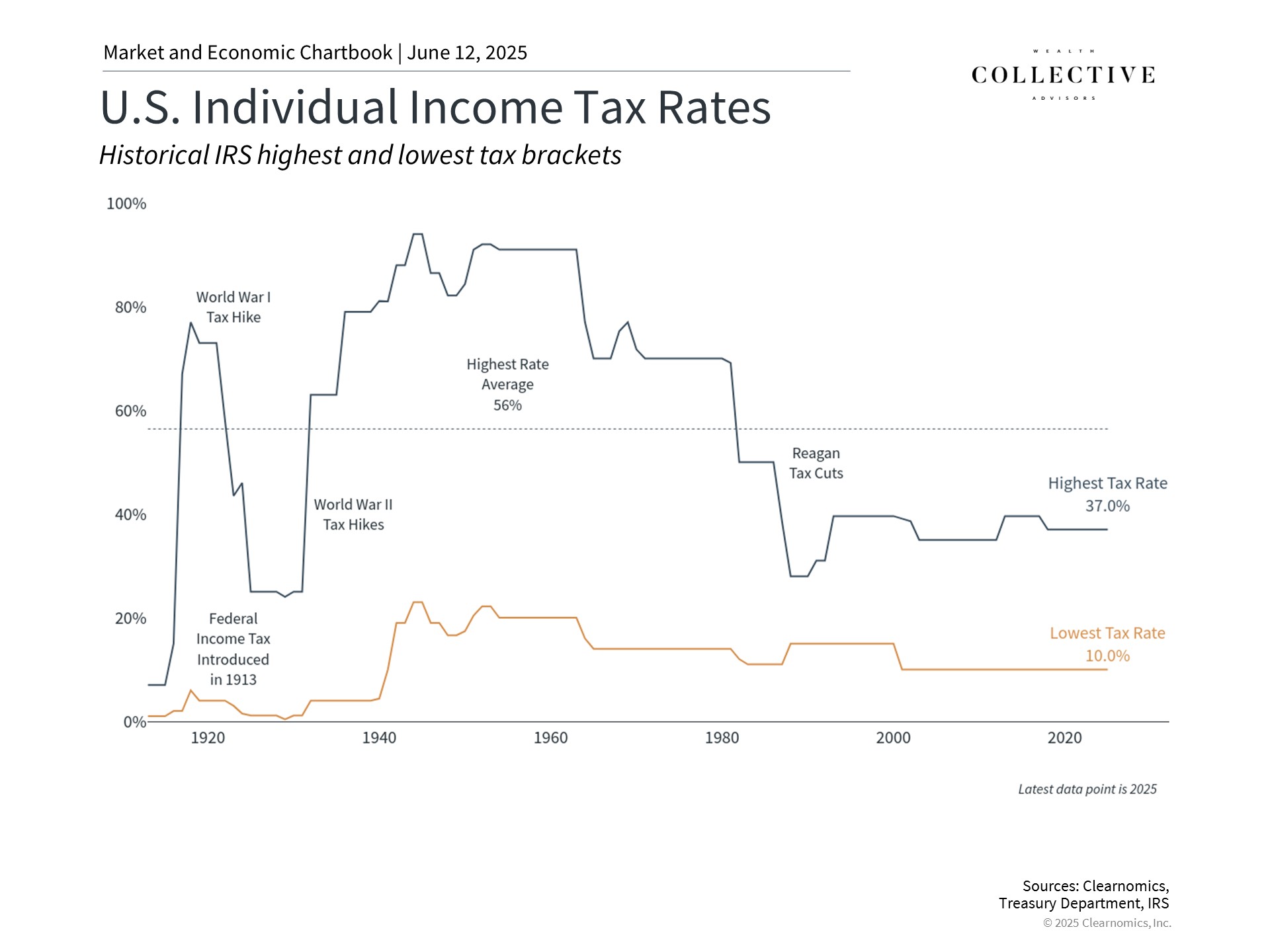
The House of Representatives recently passed a bill (H.R. 1, the One Big Beautiful Bill Act) that proposes significant tax law changes by extending the TCJA’s individual tax cuts that would otherwise expire after 2025. This would prevent a potential “tax cliff” scenario where rates would revert to pre-TCJA levels, potentially disrupting economic stability. By addressing these provisions well before their expiration, policymakers aim to create a more predictable environment for both consumers and businesses.
The comprehensive tax package contains numerous elements affecting both individuals and businesses. Key components include:
For Individuals:
- Permanent establishment of TCJA individual tax rates, maintaining a 37% top rate
- Child tax credit increase from $2,000 to $2,500 through 2028
- Increase in the state and local tax (SALT) deduction cap from $10,000 to $40,000
- Income tax exemption for tips and overtime pay through 2028
- Tax deductibility for auto loan interest through 2028
- Introduction of “money accounts for growth and advancement” (“MAGA accounts”) for children under 8, earmarked for education, small business investments, and first-home purchases
For Businesses:
- Increase in pass-through business deduction from 20% to 23%, made permanent
- Reinstatement of 100% bonus depreciation for qualified business assets acquired between January 2025 and 2029
- Restoration of research and development tax deductions
Notably, the proposal does not include previously anticipated provisions for a “millionaire tax” or modifications to carried interest tax treatment. The debt ceiling, which defines the government’s borrowing limit, may also be increased by $4 trillion.
Continued deficit spending could further expand national debt
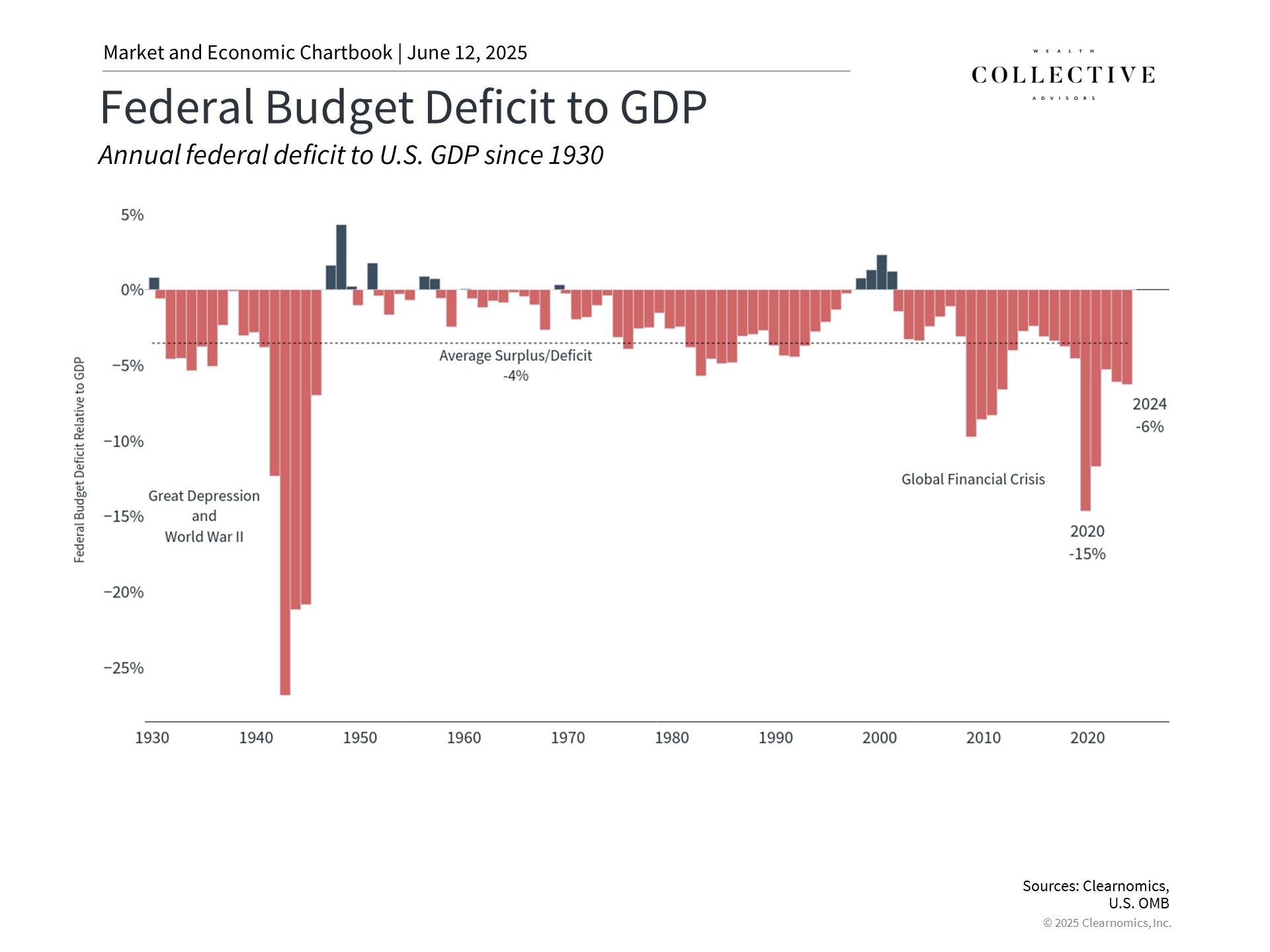
While the current proposal includes approximately $1.6 trillion in spending reductions (according to the White House and House Committee on the Budget) through adjustments to programs like Medicaid and nutrition assistance, these cuts are overshadowed by tax reductions and spending increases in other areas.
Annual budget deficits contribute directly to the national debt, which now exceeds $36 trillion according to the US Treasury, equivalent to about $106,000 per American. Reports indicate the proposed budget could add an estimated $3 trillion or more to the debt over the next decade. The Joint Committee on Taxation, a nonpartisan congressional committee, has projected that the debt could increase by $3.7 trillion during this period.
The substantial growth of national debt in recent decades is well-documented, with interest payments continuing to climb. Given that mandatory programs like Social Security and Medicare comprise most federal spending, achieving consensus on significant spending reductions presents considerable political challenges.
While deficit and debt levels are important factors affecting long-term economic health, their immediate impact should be viewed with proper context. Markets have historically demonstrated resilience across varying levels of government debt and deficit spending. Paradoxically, some of the strongest market returns in the past two decades followed periods with the largest deficits, as these typically coincided with economic crises when markets were at their lowest points. Consequently, basing investment decisions primarily on government spending patterns and deficit levels would have proven counterproductive.
The bottom line? A downgraded U.S. credit rating highlights concerns over the country’s long-term fiscal trajectory. History suggests that the best way for investors to navigate these challenges is by staying invested and maintaining a long-term financial plan. A closer look at your risk tolerance and portfolio risk model is always good to reexamine in times of uncertainty.
For informational and educational purposes only and should not be construed as specific investment, accounting, legal, or tax advice. Certain information is based upon third party data which may become outdated or otherwise superseded without notice. Third party information is deemed to be reliable, but its accuracy and completeness cannot be guaranteed. Data and analytics provided by Clearnomics, Inc. Neither the Securities and Exchange Commission (SEC) nor any other federal or state agency have approved, determined the accuracy, or confirmed the adequacy of this article.