The Dow Jones Industrial Average recently hit 40,000 for the first time ever. This milestone comes after a 5% dip earlier in the year. While this has felt like a difficult year for many investors due to inflation, high interest rates, and growth concerns, the reality is that the broad market has achieved 23 new all-time highs. Not just U.S. stocks, but international stocks, and commodities have also soared as interest rate expectations have fallen.
The main reason behind this strong market is the health of the economy, driven by consumer spending. Even with higher prices, job cuts in some sectors, and reduced savings, consumers are still financially strong. This spending is crucial as it makes up over two-thirds of the GDP, influencing corporate revenues and economic growth.
Why consumer wealth is so important to markets
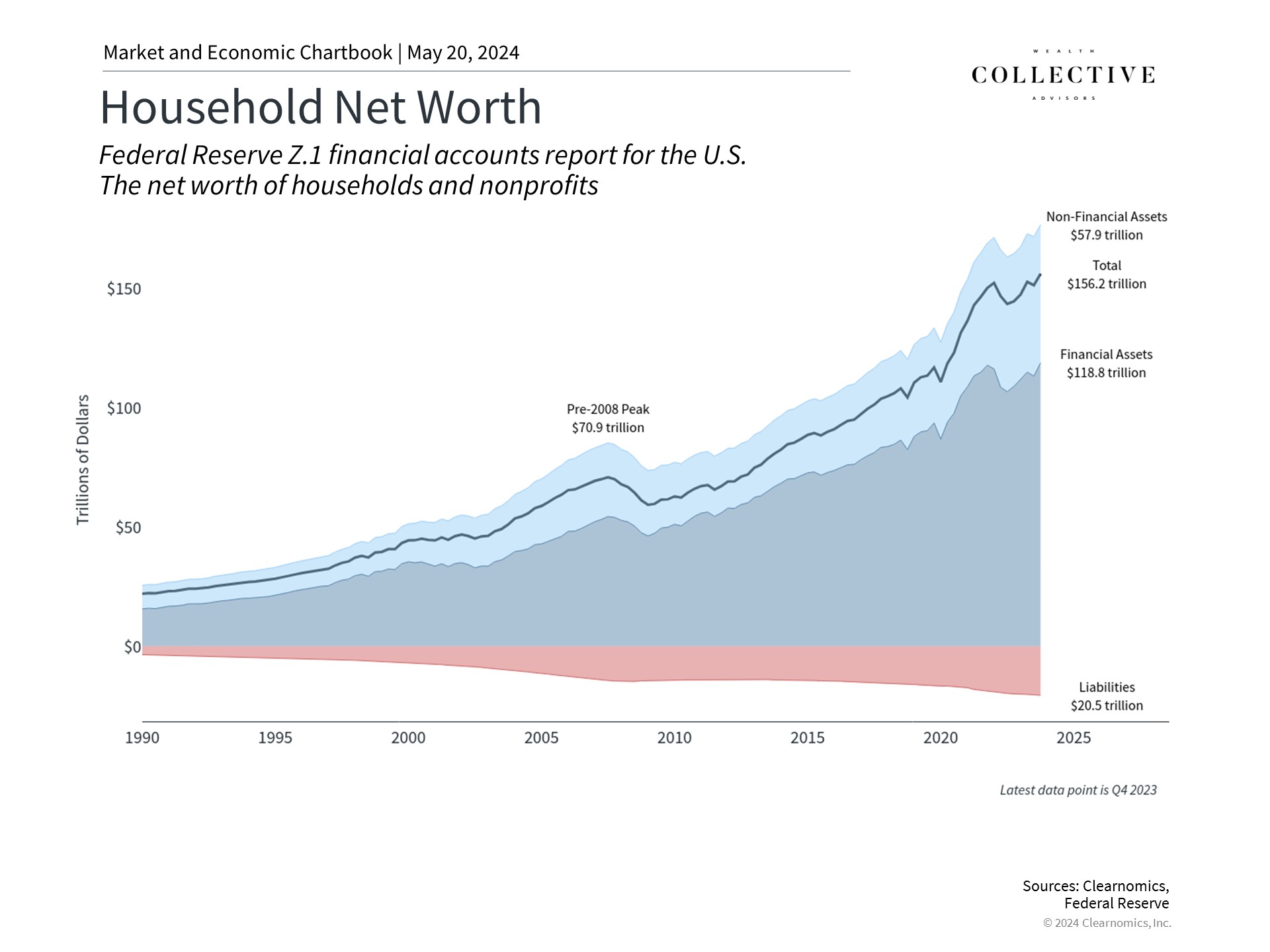
Household Net Worth is higher than ever, surpassing the previous peak before the 2008 financial crisis. Net worth includes assets like cash, stocks, bonds, and real estate, minus debts like credit card balances and auto loans. The economy and stock market’s growth have more than doubled household net worth since 2007, despite the pandemic and the 2022 market downturn.
When people feel wealthier, they tend to spend more. This spending boosts business profits, leads to higher wages, and ultimately raises stock prices. This effect happens even if the increased value is in less liquid assets like homes or retirement accounts.
Consumer debt showing signs of strain
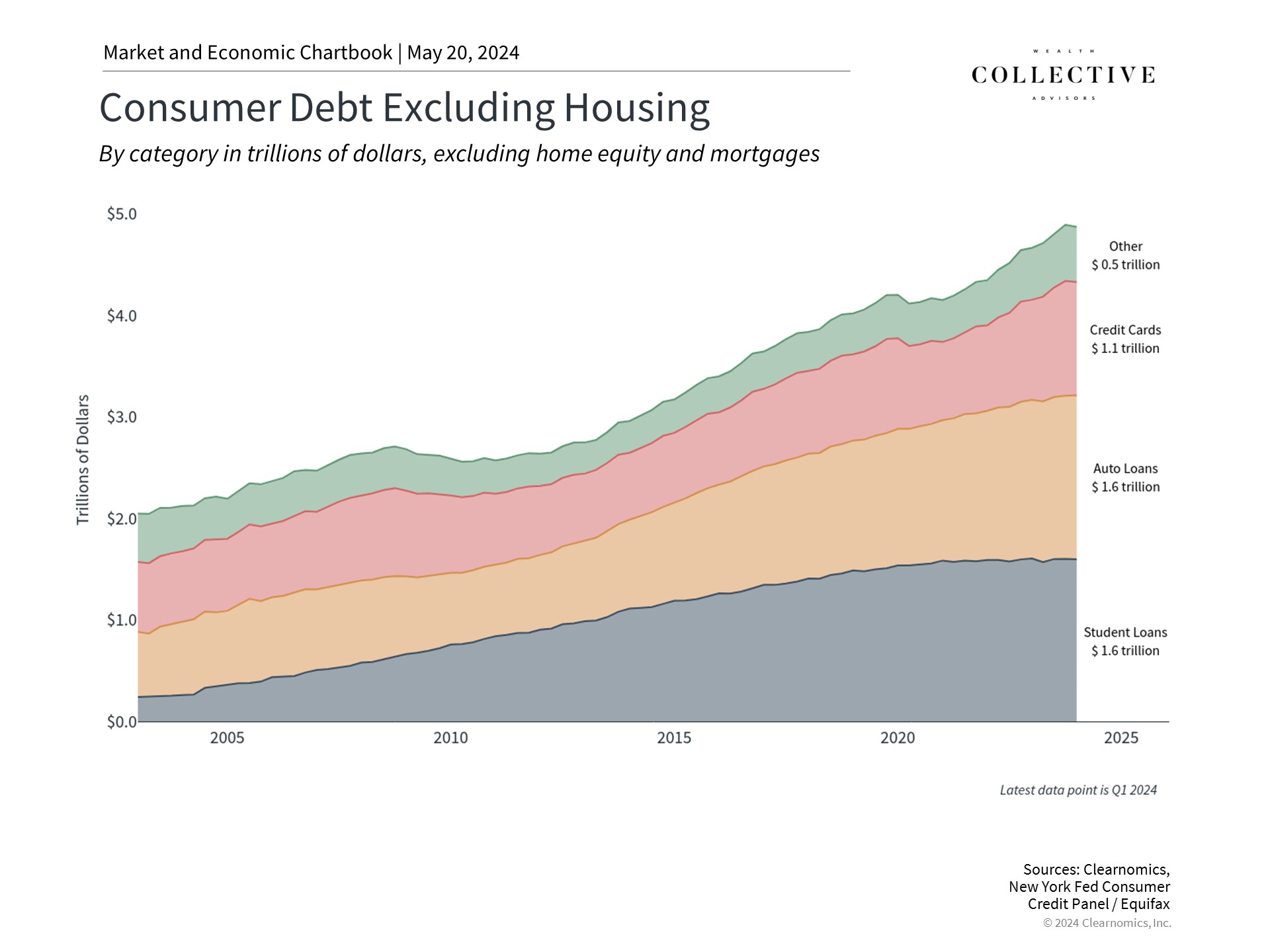
While household net worth has grown, so has consumer debt. There are signs of financial strain, especially with credit card and auto loan payments. Credit card delinquencies have risen to 8.9%, up from the 10-year average of 5.9%. Total credit card debt is $1.1 trillion, 13.1% higher than a year ago. Auto loan delinquencies are up to 7.9%, with total debt growing to $1.6 trillion.
Higher interest rates make it tougher to manage these debts. The Fed’s rate hikes are meant to slow economic growth and control inflation. As a result, new debt is being added more slowly, which is a positive sign.
Consumer sentiment fluctuates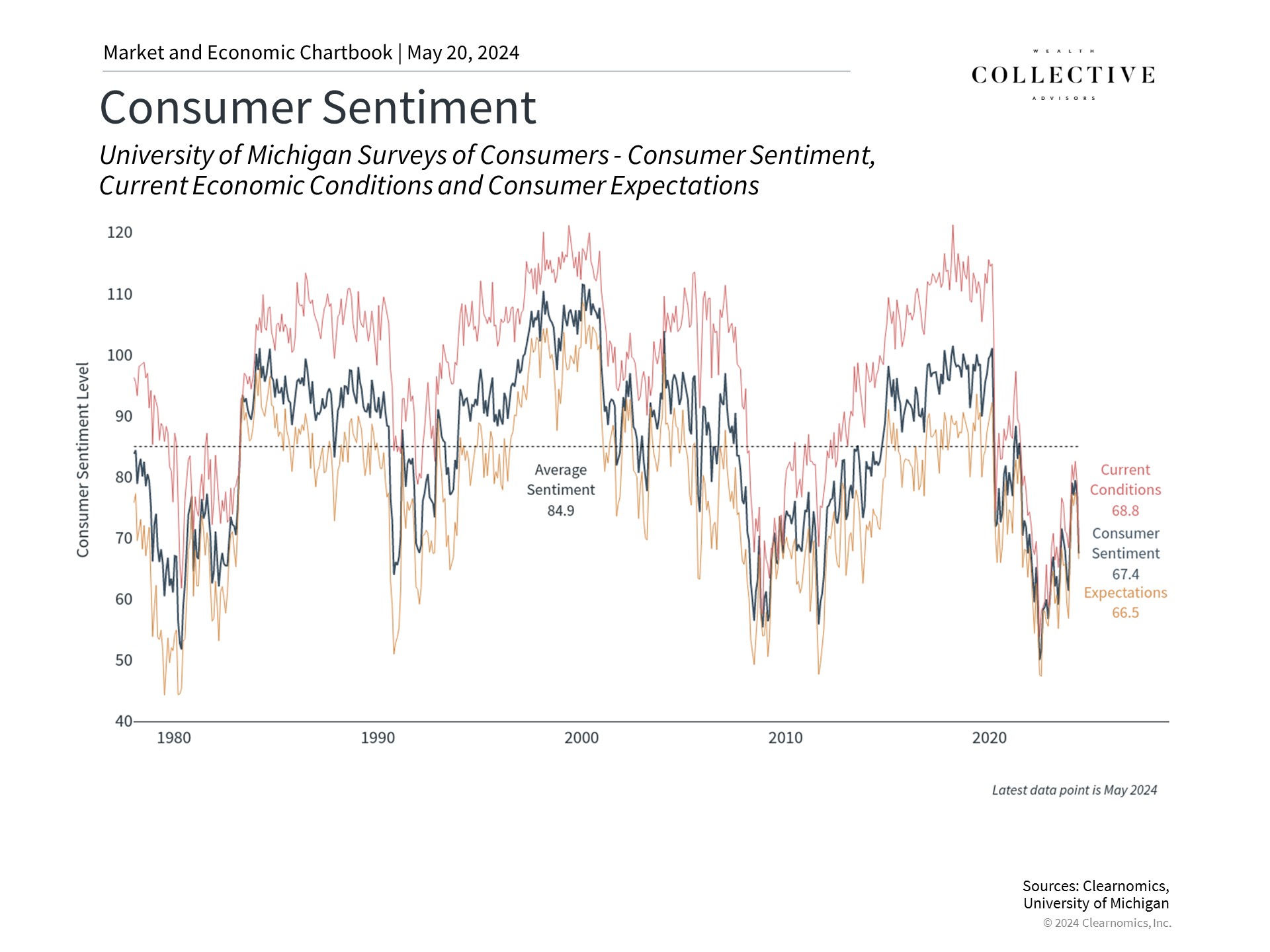
People’s feelings about the economy change with market ups and downs and inflation. Sentiment improves when inflation slows and job markets are strong. Despite low unemployment, high inflation has dampened optimism.
However, recent data shows a slowing inflation rate, with the Consumer Price Index indicating lower levels than in previous years. This trend has led markets to expect rate cuts from the Fed, indicating a hopeful future.
Key Takeaways
The financial health of U.S. consumers remains strong despite challenges like inflation and rising debt. This strength is a major reason behind the market’s new highs. Investors should remain focused on longer-term trends rather than get swayed by daily news or individual reports. Keeping a broadly diversified, lower cost, risk managed portfolio is still the most prudent solution for uncertain times.
For informational and educational purposes only and should not be construed as specific investment, accounting, legal, or tax advice. Certain information is based upon third party data which may become outdated or otherwise superseded without notice. Third party information is deemed to be reliable, but its accuracy and completeness cannot be guaranteed. Data and analytics provided by Clearnomics, Inc. Neither the Securities and Exchange Commission (SEC) nor any other federal or state agency have approved, determined the accuracy, or confirmed the adequacy of this article.